|
|
|
|
 |
 |
| NEW! |
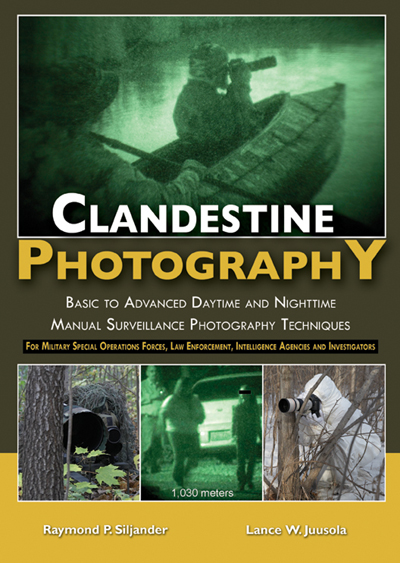
| CLANDESTINE PHOTOGRAPHY: Basic to Advanced Daytime and Nighttime Manual Surveillance Photography Techniques-For Military Special Operations Forces, Law Enforcement, Intelligence Agencies, and Investigators |
|
| by Raymond
P. Siljander and Lance W. Juusola |
|
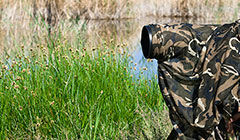
| This book explains how to take surreptitious photographs and record video of people and property in a safe and effective manner while producing excellent results. It is the most comprehensive text on clandestine photography available. It takes the reader through conventional as well as the most sophisticated clandestine photography methods in practice today, and it covers the use of all types of equipment ranging from off-the-shelf to the most high-tech equipment available. The ultra-long-range night vision photography methods discussed in this book were devised by the authors and only exist here. Readers will discover esoteric techniques for photographically recording recognizable human and vehicle plate images from distances of over a mile in both daylight and night conditions. Myriad methods for secretly photographing people and property under diverse and difficult conditions are presented. Readers will discover innovative applications of combinations of old and new photographic-related technologies—some combined in unexpected ways that produce surprising results. It is written and extremely well illustrated in an easy to understand style for all photographers regardless of skill level. The book is appropriate for anyone in law enforcement, military operations, and private investigation. It will also benefit government surveillance specialists and those responsible for detecting and thwarting manual clandestine photography. |
|
|
|
 |
|
| NEW! |
|
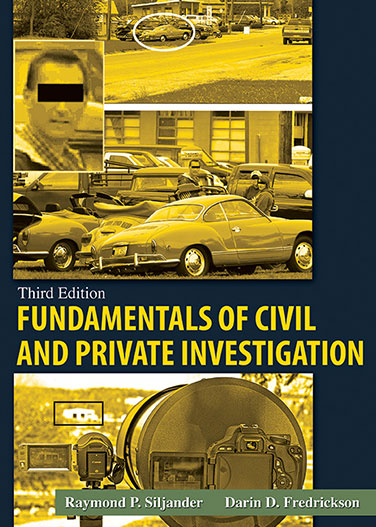
| FUNDAMENTALS OF CIVIL AND PRIVATE INVESTIGATION (3rd Ed.) |
|
| by Raymond
P. Siljander and Darin D. Fredrickson |
|
| Since the first and second editions of this book, there have been extensive changes in the private investigative sector. The Internet and technological advances have revolutionized how investigators work cases. Today, private investigators have computer access to diverse sources of information, and communication and photographic technologies have reached levels inconceivable not many years ago. This third edition guides the reader through these new and essential investigative techniques. From the beginning, the authors explain the various needs of the investigator and then show how to apply those abilities. These include problem solving, understanding people, identifying differences, applying laws, understanding and implementing successful interviewing techniques, and identifying exception rules. Also discussed are such areas as report writing, interrogations, locating missing persons, industrial and commercial undercover operations, accident investigations, business and industrial espionage, and legal constraints. Expanded and greatly updated chapters on information technology, modern equipment and methods, optical-related visual aids, VIP protection, and managing a detective agency are provided. In addition, the text is generously illustrated with photos, diagrams, and document examples. This new edition has been prepared with the greatest attention to both textual quality and production details. The book will serve well as both a learning tool and a source of reference. The primary target populations of this book are individuals who desire to become a private investigator, individuals new to the profession, and those who desire to broaden their professional knowledge. Others who will benefit from the information the book provides include insurance professionals, attorneys and paralegals, police officers and other government investigators, and law and criminal justice students. |
|
|
|
|
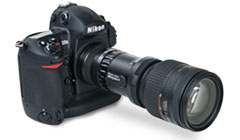
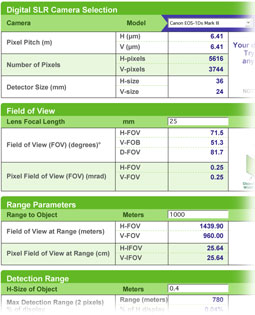
| Digital SLR
Camera Target Resolution Calculator |
|
| This online Night
Vision Range Calculator enables you to easily estimate
the maximum range that an object can be detected
when using various camera platforms (intensified
and non-intensified). |
|
 |
|
|
|
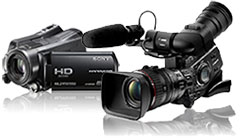
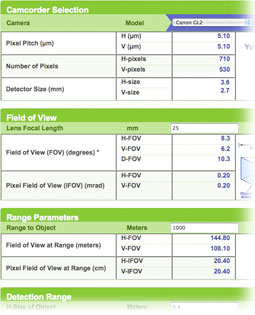
| Camcorder
Target Resolution Calculator |
|
| This online Night
Vision Range Calculator enables you to easily estimate
the maximum range that an object can be detected
when using various camera platforms (intensified
and non-intensified). |
|
 |
|
|
|
|
|